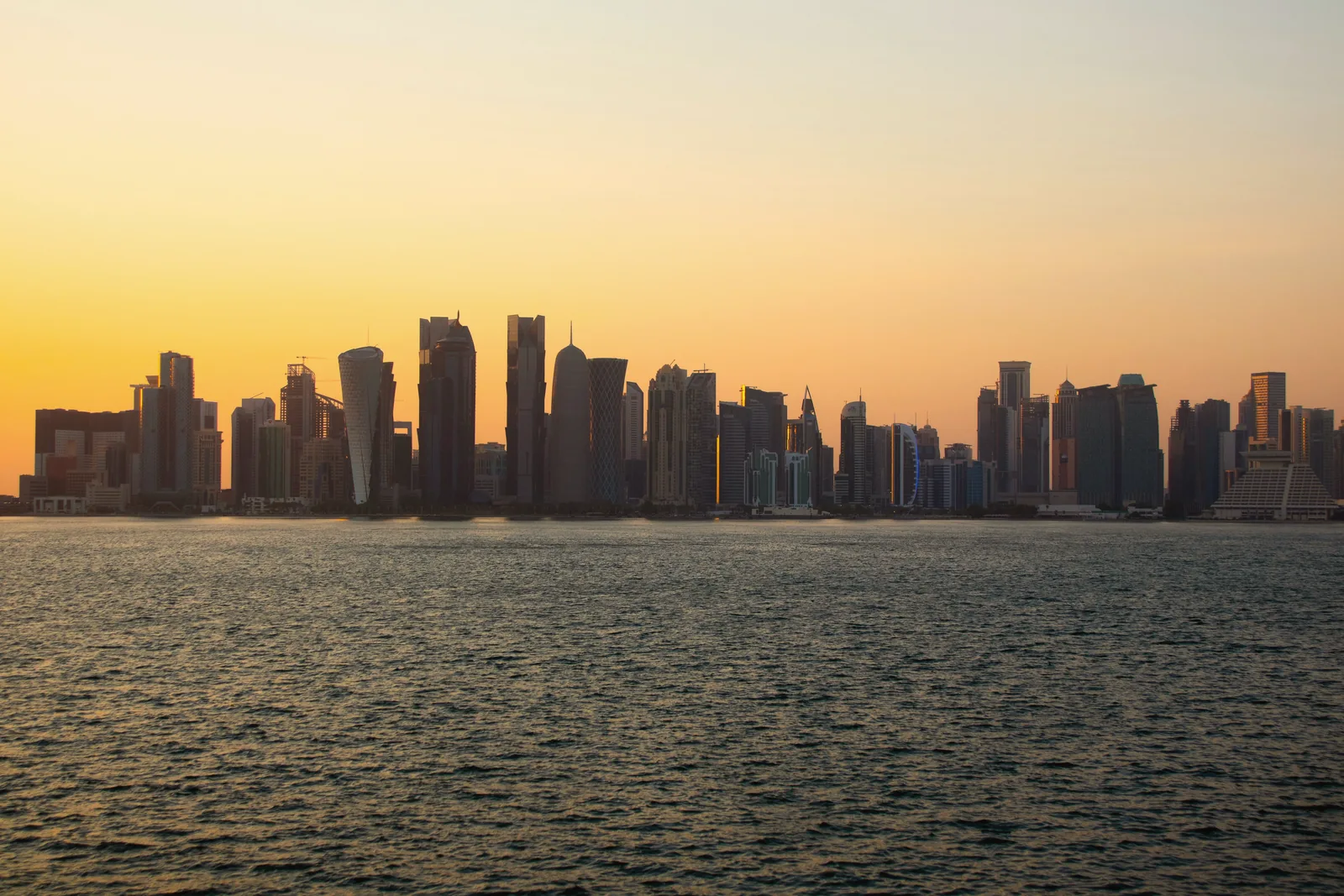
Starting a business in Qatar
- Rank of 25
- =03
- Index score of 100
- 86
The case for Qatar
Qatar suits a business that wants an onshore base in the Gulf with a low tax rate and no VAT. There are two main routes. The mainland route runs through the Ministry of Commerce and Industry's Single Window, where commercial registration takes 2 to 3 business days and foreign investors can own up to 100% in most sectors under Law No. 1 of 2019. The Qatar Financial Centre (QFC) offers an English common law platform with 100% foreign ownership, no minimum capital and a 10% tax on locally sourced profits. QFC holding companies and special purpose companies cost USD 500 to apply and USD 500 a year, which makes them a cheap regional holding or financing vehicle.
Qatar suits less well a very small business that wants a light footprint, as a QFC LLC pays USD 5,000 a year, needs audited accounts, a Qatar resident director and secretary (or a licensed provider) and an office in approved premises, and mainland companies need a commercial permit for their premises. The main drawback is a small domestic market of about 3 million people and a cost of living above the world average, with housing in Doha the largest expense.
How a company is taxed
The 10% rate applies to the foreign-owned share of mainland profits and to QFC locally sourced profits. Companies wholly owned by Qataris and GCC nationals resident in Qatar pay no income tax. Large groups face a 15% minimum top-up tax from 2025. There is no VAT. There is no income tax on salaries, wages or allowances. Self-employed people can be taxed on Qatar-source business income.
Setting up and running a company
2 to 3 business days
MoCI commercial registration through the Single Window takes 2 to 3 business days, from QAR 500 a year. A QFC holding company or SPC costs USD 500 to apply and USD 500 a year; a QFC LLC pays USD 5,000 a year.
Office and local officers
Mainland companies need approved premises. QFC firms need a registered office in the QFC, a Senior Executive Function and a Qatar resident director and secretary, unless a licensed support service provider fills these roles.
Not public
Companies declare beneficial owners holding 20% or more to the Ministry of Commerce and Industry with their commercial registration application. QFC companies file an annual UBO report. Neither register is public.
Property or entrepreneur routes
Buying property worth QAR 730,000 brings a renewable residence permit without a sponsor, and QAR 3.65m brings permanent residency privileges. An entrepreneur residency needs endorsement by a local incubator.
Fees shown are government registry fees only. Agent, licence, office, audit and professional costs are additional and usually make up most of the cost of setting up.
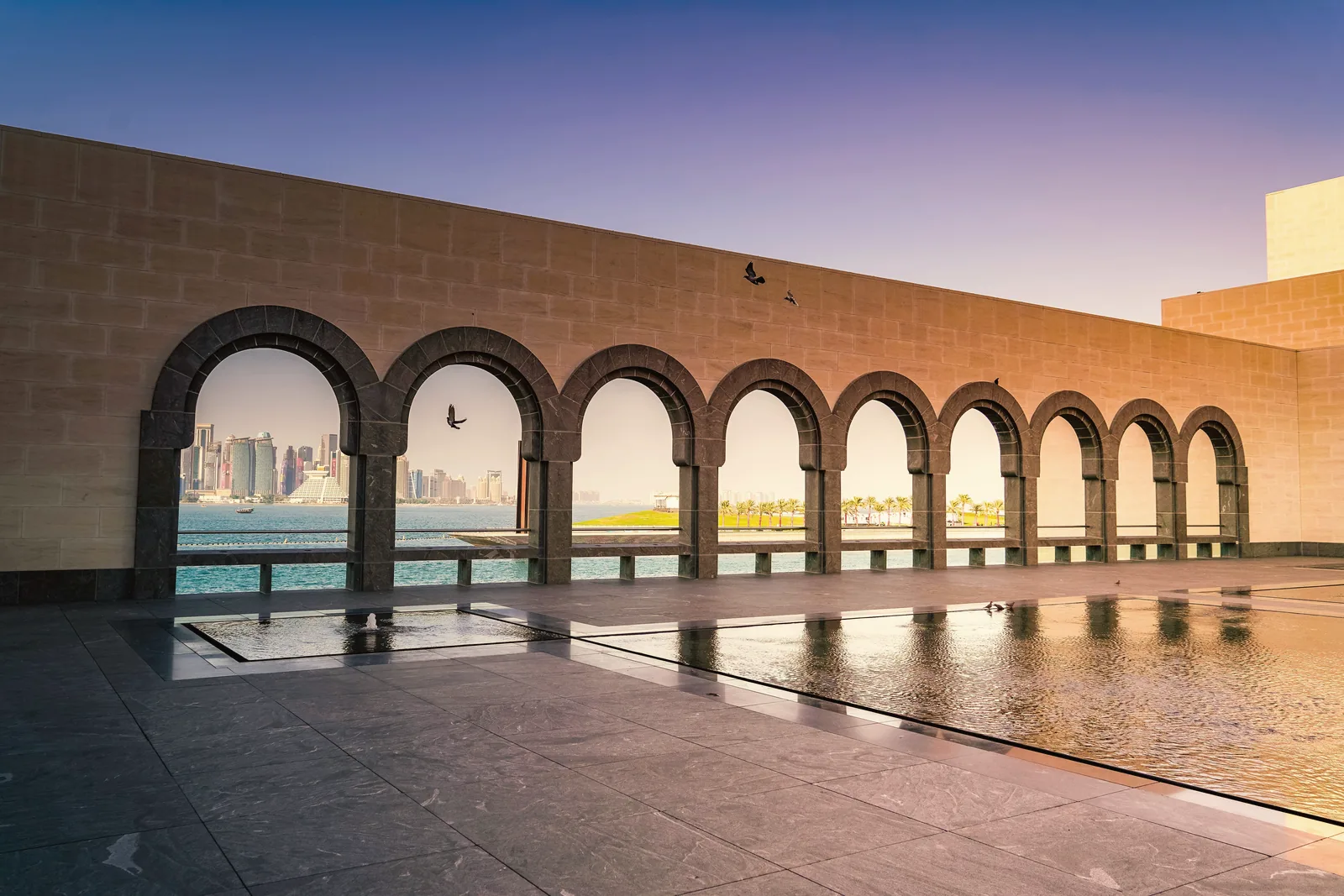
Life in Doha
- Flights
- Hamad International Airport says it connects to more than 197 destinations with 55 airline partners, led by Qatar Airways.
- Schools
- Doha has a large choice of private international schools teaching British, American, IB and other curricula, alongside state schools mainly for Qatari nationals.
- Healthcare
- Hamad Medical Corporation runs the main public hospitals, and Law No. 22 of 2021 makes health insurance compulsory for expatriates and visitors.
- Banking
- Qatar National Bank, Commercial Bank, Doha Bank and international banks operate in Doha. Opening an account needs a commercial registration or QFC licence and a computer card.
Wealth, inheritance and a family home
- Inheritance and gift tax
- Qatar has no inheritance, estate or gift tax, and estates of Muslims are generally divided under Sharia rules unless a valid will under another law applies.
- Wealth tax
- There is no wealth tax or annual property tax, though owners pay registration fees when property is registered.
- Capital gains
- Individuals are not taxed on gains from personal investments, while gains made by taxable businesses form part of their 10% taxable income and QFC firms are exempt on disposals of shareholdings of 10% or more.
- Personal income tax
- Salaries, wages and allowances are not taxed, and only Qatar-source business income of the self-employed can fall into the 10% income tax.
- Tax information exchange
- Qatar exchanges financial account information under the OECD Common Reporting Standard and has an intergovernmental agreement with the United States under FATCA.
- Buying a home
- Non-Qataris can buy freehold or 99-year usufruct property in designated areas such as The Pearl, Lusail's Fox Hills and Marina, and Qetaifan Island, and a purchase of QAR 730,000 or more brings a residence permit.
The Qatar dossier
About 30 pages on business and life there, with official sources.
Questions people ask about Qatar
The standard rate is 10%. On the mainland it applies to the share of profits belonging to foreign owners; companies wholly owned by Qataris and GCC nationals resident in Qatar pay none. QFC companies pay 10% on locally sourced profits. Oil and gas operations pay at least 35%.
No. As of October 2026 Qatar has no VAT or sales tax. It signed the GCC VAT framework, which sets a 5% rate, but has not introduced it. Excise tax applies to tobacco, sugary and energy drinks and special purpose goods.
Yes, for large groups. Law No. 22 of 2024 introduced a 15% domestic minimum top-up tax and an income inclusion rule for groups with consolidated revenue of at least EUR 750m, for years starting on or after 1 January 2025. It applies across Qatar, including the QFC and free zones.
Yes, in most sectors. Law No. 1 of 2019 allows foreign investors to own up to 100% of a project's capital, after review by the Invest in Qatar Center against the permitted activities list. Banking, insurance and commercial agencies are excluded. QFC and free zone companies can be 100% foreign owned.
The application fee for non-regulated activities is USD 500, cut from USD 5,000 in February 2025. A QFC LLC then pays USD 5,000 a year for its first activity. A holding company or special purpose company pays USD 500 to apply and USD 500 a year.
The Qatar Free Zones Authority runs Ras Bufontas, next to Hamad International Airport, and Umm Alhoul, next to Hamad Port. It offers 100% foreign ownership, a 20-year corporate tax holiday and duty-free import for re-export.
No. Mainland companies declare beneficial owners to the Ministry of Commerce and Industry with their commercial registration, and QFC companies file an annual UBO report with the QFC Authority. The information is not open to the public.
Yes. Property worth at least QAR 730,000 in an area open to foreign owners brings a renewable residence permit for the owner and family without an employer sponsor. Property worth at least QAR 3.65m brings permanent residency privileges, including public healthcare and education.
Thinking about Qatar?
A short call settles what a ranking cannot: your residence, your structure and your timeline.