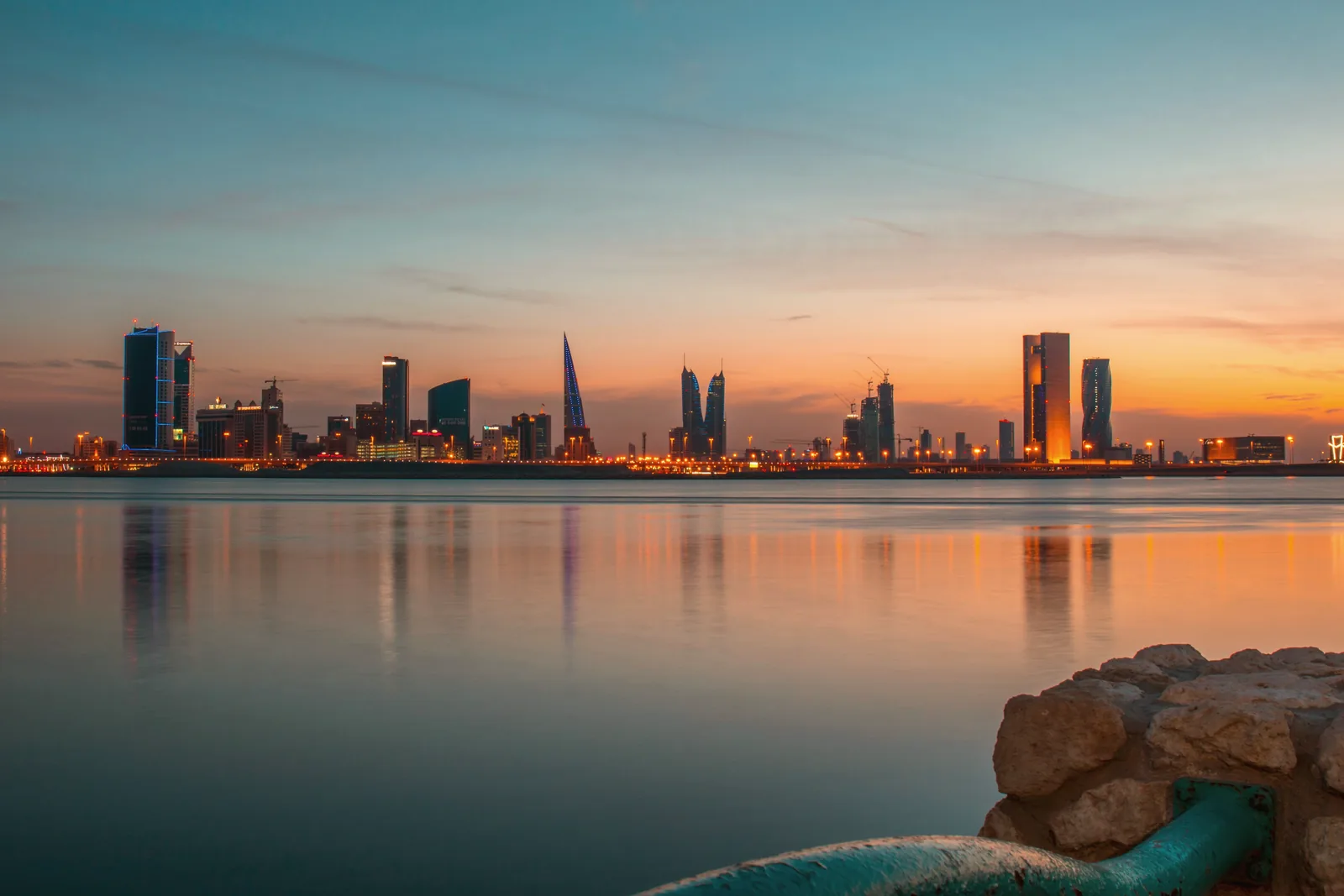
Starting a business in Bahrain
- Rank of 25
- 06
- Index score of 100
- 84
The case for Bahrain
Bahrain suits a founder or group that wants a low cost operating company in the Gulf with full foreign ownership in most activities. There is no general corporate income tax and no personal income tax, and VAT is 10%. A WLL company is registered online through the Ministry of Industry and Commerce's Sijilat portal, with registration taking about 5 days and the activity licence about 14 working days. The registration fee is BHD 50 plus BHD 100 for up to three activities, and the same amounts are paid again each year. Owning the company gives a route to an investor residence permit.
Bahrain suits less well a business that needs a large home market, since the population is about 1.5 million, or one that wants to stay entirely outside future company tax. The main drawback is that the tax position is changing: a draft law would put a 10% tax on larger local companies from 2027, and large multinational groups already pay a 15% top-up tax from 2025.
How a company is taxed
Ordinary companies pay no corporate income tax. Oil and gas profits are taxed at 46%, multinational groups with revenue of EUR 750 million or more pay a 15% top-up tax from 2025, and a draft 10% tax on larger local companies is proposed from 2027. There is no personal income tax. Employers pay social insurance of 3% on expatriate salaries, up to a BHD 4,000 monthly ceiling.
Setting up and running a company
About 5 days
Registration through Sijilat takes about 5 days, or about 14 working days with the activity licence. The fee is BHD 50 plus BHD 100 for up to three activities, with set-up costs generally under BHD 190.
Business address and audit
The company needs a business address recorded with the Ministry, usually a lease or a qualifying shared office, and must keep audited accounts. There is no statutory minimum capital for a WLL.
Not public
Companies must record anyone owning or controlling 10% or more with the Ministry through Sijilat and confirm the details at each annual renewal. The register is not open to the public.
Investor permit
An owner of a registered Bahraini company can apply for a self sponsored investor residence permit. Golden Residency is open to property owners from BHD 130,000 and to some long serving residents and retirees.
Fees shown are government registry fees only. Agent, licence, office, audit and professional costs are additional and usually make up most of the cost of setting up.
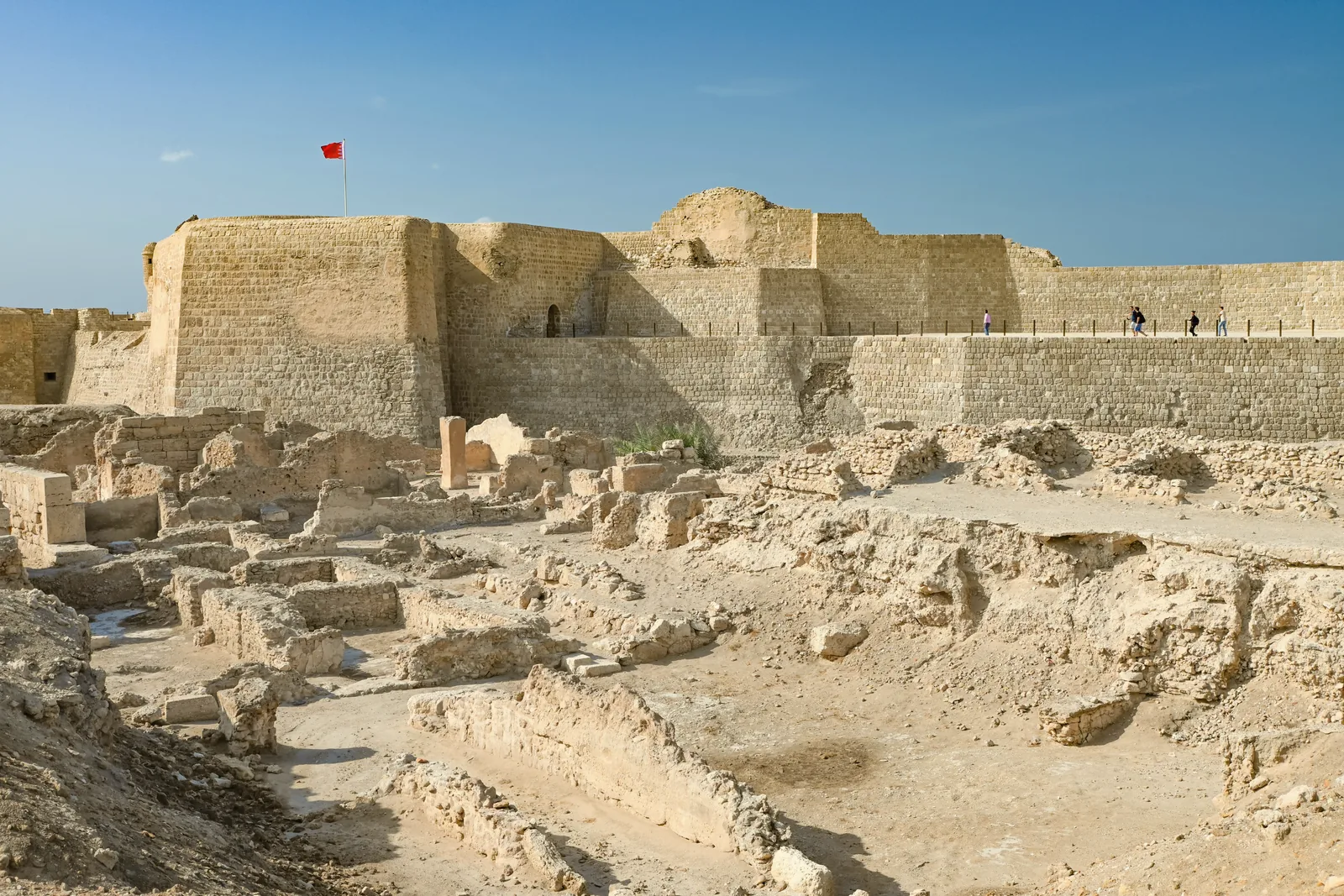
Life in Manama
- Flights
- Bahrain International Airport has nonstop scheduled flights to 67 destinations, including seasonal routes, across the Gulf, South Asia, Europe and East Asia.
- Staff
- Employees recruited from abroad need a work permit from the Labour Market Regulatory Authority, applied for by the employer.
- Banking
- Banks are regulated by the Central Bank of Bahrain. A local bank account is needed to deposit capital and activate the commercial registration.
Wealth, inheritance and a family home
- Inheritance and gift tax
- Bahrain has no inheritance, estate or gift tax, though estates of Muslims are generally divided under Sharia succession rules unless planning is in place.
- Wealth tax
- There is no wealth or net worth tax, though landlords pay a 10% municipal tax on rent charged to expatriate tenants.
- Capital gains
- Individuals pay no tax on capital gains from shares, property or other assets.
- Personal income tax
- There is no personal income tax on salaries, dividends or investment income.
- Tax information exchange
- Bahrain exchanges financial account information under the Common Reporting Standard and has a FATCA agreement with the United States.
- Buying a home
- Foreigners can buy freehold property in designated areas, buyers pay a 2% registration fee (1.7% if paid within two months), and property worth BHD 130,000 or more can support a Golden Residency application.
The Bahrain dossier
About 30 pages on business and life there, with official sources.
Questions people ask about Bahrain
There is no general corporate income tax. Oil and gas companies pay 46% on net profits, and multinational groups with global revenue of EUR 750 million or more pay a 15% Domestic Minimum Top-up Tax from 1 January 2025.
A draft law approved by the Cabinet in December 2025 would charge 10% on larger local companies, with a reported profit threshold of BHD 200,000, from 2027. It was still before Parliament in 2026.
Yes, in most commercial and industrial activities. Banking, insurance, telecoms and some other sectors need separate approval or licensing.
Registering a company through the Sijilat portal takes about 5 days. Including the activity licence, it takes about 14 working days, depending on the activity.
The commercial registration is renewed every year for BHD 50, plus BHD 100 for each block of three activities. Renewal is done online and processed immediately.
The BHD 20,000 minimum was removed in 2020. Capital must be enough for the business, and some regulated activities set their own minimum.
No. Under Ministerial Order 83 of 2020, companies file anyone owning or controlling 10% or more with the Ministry of Industry and Commerce, and confirm the details at each annual renewal.
VAT is 10%. Businesses must register once annual taxable supplies exceed BHD 37,500, and can register voluntarily from BHD 18,750.
Thinking about Bahrain?
A short call settles what a ranking cannot: your residence, your structure and your timeline.